HOME / MANUFACTURING / VACUUM CASTING
Vacuum Casting
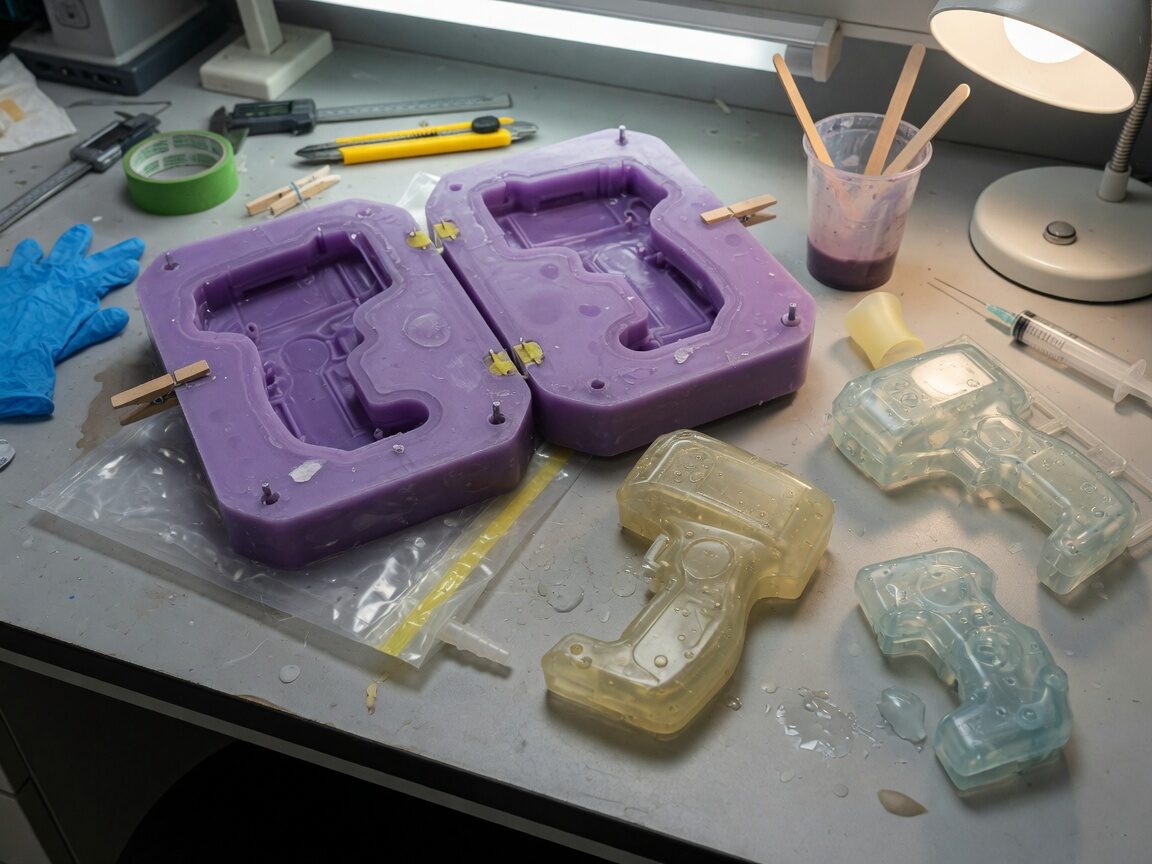
Silicone soft tooling taken from a master pattern, producing tens of cosmetic or near-functional parts in polyurethanes that simulate production materials. The bridge between a single prototype and a moulding programme.
TYPICAL — SUBJECT TO DRAWING REVIEW
Tolerance ±0.2 mm typical
Quantities 10–100 per master, typically 20–25 pulls per mould
Lead-time factors Master quality, colour matching, part size
File formats STEP · STL · SLDPRT · PDF
Inspection options Visual · dimensional spot check · colour approval
When to use it — and when not to
USE IT WHEN
- You need tens of matching cosmetic parts before tooling
- Colour, texture and transparency need to be evaluated
- Material behaviour can be simulated rather than exact
- Investor, trade show or user-testing builds are coming up
LOOK ELSEWHERE WHEN
- Production material properties must be certified
- Quantities exceed a few hundred
- Tolerances are critical across large dimensions
- The part must survive high temperature or sustained load
Materials and finishes
PU ABS-LIKE
General cosmetic housings
PU PP-LIKE
Semi-flexible clips and snaps
PU RUBBER 40–90A
Seals, grips, overmould simulation
PU CLEAR
Lenses and light pipes, polished
Compared with adjacent processes
PROCESSQUANTITYTOLERANCEBEST FOR
Vacuum Casting 10–100 ±0.2 mm Cosmetic short runs
3D Printing 1–50 ±0.3 mm Single iterations, fastest
Injection Moulding 500+ ±0.1 mm Volume and certified materials
CNC Machining 1–500 ±0.05 mm Tight tolerance, real material
Typical ranges for comparison only. Achievable tolerance depends on geometry, material, fixturing and inspection method, and is confirmed on drawing review.
FAQs
How many parts come from one mould?
Typically around 20–25 before the silicone degrades; a second mould is taken from the master when more are needed. [VERIFY per material]
Can you match a Pantone or a texture?
Colour can be matched to a supplied reference and textures transferred from the master. Approval samples are agreed before the run.