HOME / MANUFACTURING / 3D PRINTING
3D Printing
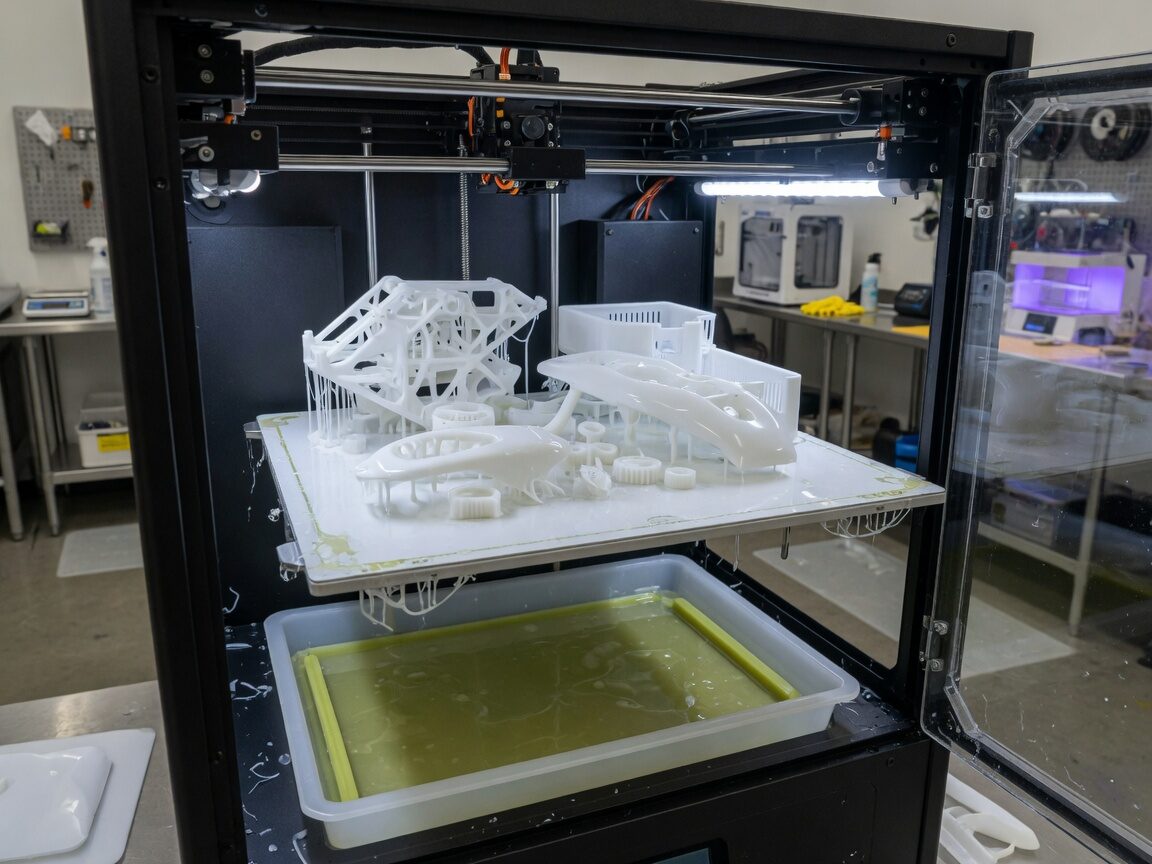
The fastest way to hold the design in your hand. Additive processes cover concept models, complex internal geometry and short-run functional parts, with the technology chosen for accuracy, material and surface rather than availability.
TYPICAL — SUBJECT TO DRAWING REVIEW
Tolerance ±0.3 mm or ±0.3% typical
Layer height 0.05–0.2 mm process dependent
Lead-time factors Build volume, part count, finishing
File formats STEP · STL · OBJ · 3MF · PDF
Inspection options Visual · dimensional spot check
When to use it — and when not to
USE IT WHEN
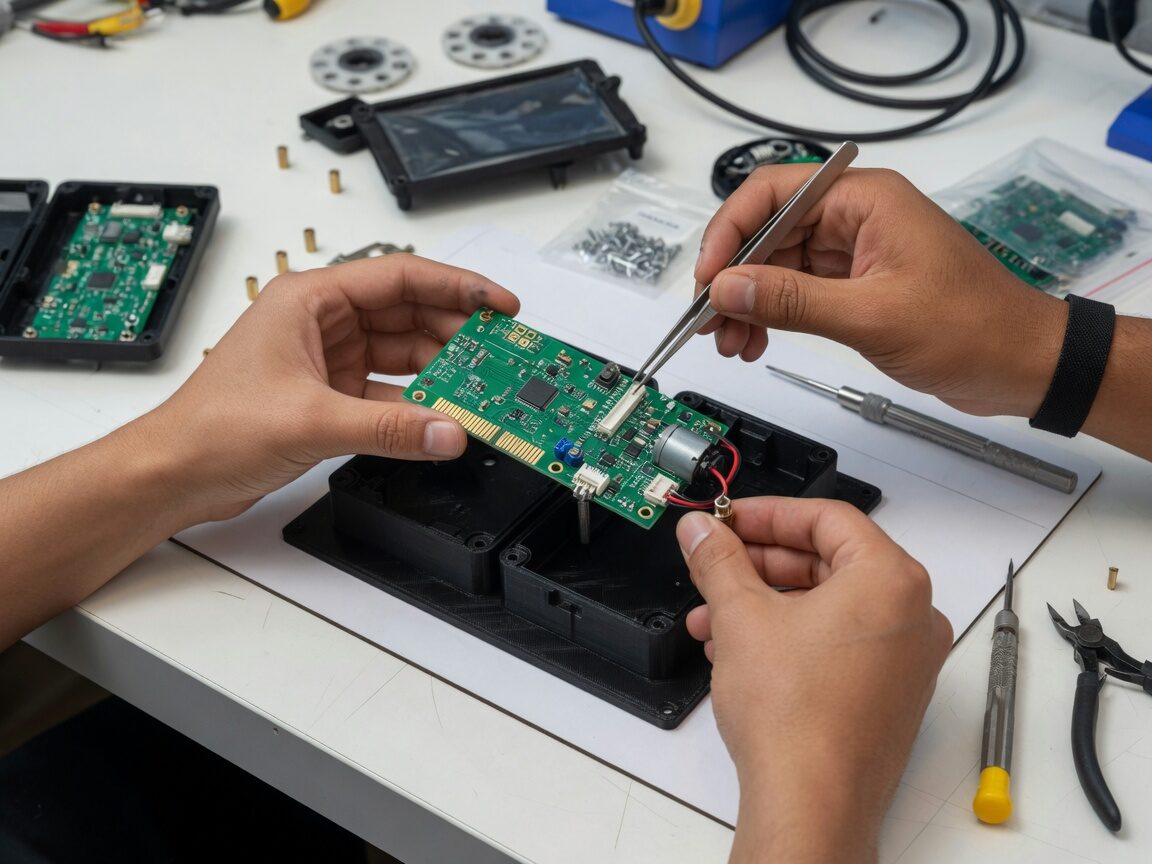
- You need a physical check of form and fit within days
- Geometry is complex, internal or lattice-based
- Quantities are one to fifty and cosmetics are secondary
- The design is likely to change again before tooling
LOOK ELSEWHERE WHEN
- Mechanical properties must match the production material
- Surfaces must be optically flat or truly transparent
- Tolerances below ±0.1 mm are load-bearing
- Volumes make moulding or machining cheaper
Materials and finishes
SLA RESIN
Fine detail, smooth cosmetic surfaces
SLS PA12
Durable functional nylon, no supports
MJF PA12
Consistent mechanical properties
FDM ABS
Low-cost early iterations
TPU
Flexible seals, grips, gaskets
DMLS AL
Metal additive for complex geometry
Compared with adjacent processes
PROCESSQUANTITYTOLERANCEBEST FOR
SLA 1–50 ±0.2 mm Cosmetic models, fine detail
SLS / MJF 1–200 ±0.3 mm Functional nylon parts
FDM 1–20 ±0.5 mm Cheap early iterations
CNC Machining 1–500 ±0.05 mm Real material, tight tolerance
Typical ranges for comparison only. Achievable tolerance depends on geometry, material, fixturing and inspection method, and is confirmed on drawing review.
FAQs
Which technology should I choose?
Start from what the part has to prove. Appearance favours SLA, function favours SLS or MJF, budget iteration favours FDM. Send the model and an engineer recommends the fit.
Can printed parts be finished to look moulded?
Sanding, priming, painting and texture can get close for appearance models. Say so up front, since it changes wall thickness and draft decisions.
Are printed parts strong enough for testing?
For many functional tests, yes — with the caveat that anisotropy and layer adhesion differ from moulded or machined parts. We state the limitations before you test.