<h2 id="direct-answer">Direct answer</h2>
<p>Moving from prototype to production is not a single handoff. It is a sequence of builds that each answer different questions: does the design work, is it robust, and can the process repeat at rate? Teams that skip from a clever prototype to volume tooling without validation gates usually pay in scrap, schedule slips, and confusing ownership.</p>
<p>GProto frames the journey as engineer, prototype, validate, and produce—with explicit decision gates, documentation, and one project owner across partners.</p>
<h2 id="prototype-versus-production">Prototype versus production</h2>
<p>A prototype exists to learn. A production part exists to repeat. Prototypes answer whether something can fit or work once; production systems answer whether it can fit and work repeatedly with yield, cosmetics, packaging, and supply chain reality. Confusion starts when a successful demo is treated as production readiness.</p>
<h2 id="stage-model-used-by-serious-hardware-teams">Stage model used by serious hardware teams</h2>
<p>Language varies—EVT, DVT, PVT, alpha, beta, release candidate—but the underlying idea is stable. Engineering validation focuses on design intent in integrated builds. Design validation focuses on meeting requirements under realistic conditions. Production validation focuses on process capability at meaningful rate with a quality system scaled to risk.</p>
<p>GProto maps these ideas onto Discover, Engineer, Prototype, Validate, and Produce without pretending every program needs identical calendar time.</p>
<h2 id="discover-and-engineer">Discover and engineer</h2>
<p>Before CAD heroics, write the product problem: users and environment, performance requirements, cost targets, compliance landscape, and real schedule constraints. Deliver a brief that can fail a design review.</p>
<p>Industrial design, mechanical engineering, electronics, and firmware should run against manufacturing constraints. Interfaces must be owned explicitly: connectors, keep-outs, grounding, assembly order. Stage crafts remain distinct; ownership must still be single-threaded.</p>
<h2 id="prototype-for-the-lesson-not-the-brochure">Prototype for the lesson, not the brochure</h2>
<p>Match manufacturing process to learning goal. Appearance models prioritize finish. Fit checks prioritize dimensional truth. Functional tests require production-intent materials where physics demand them. Integration builds combine mechanical, electronics, and firmware. Over-building wastes money; under-building creates false confidence.</p>
<h2 id="validate-with-evidence">Validate with evidence</h2>
<p>Validation converts anecdotes into records: test plans linked to requirements, failure reports with disposition, revision-controlled drawings, cosmetic standards with approved samples, and environmental or reliability tests as the market requires. If your team argues from memory, you are not validating.</p>
<h2 id="npi-discipline-in-production">NPI discipline in production</h2>
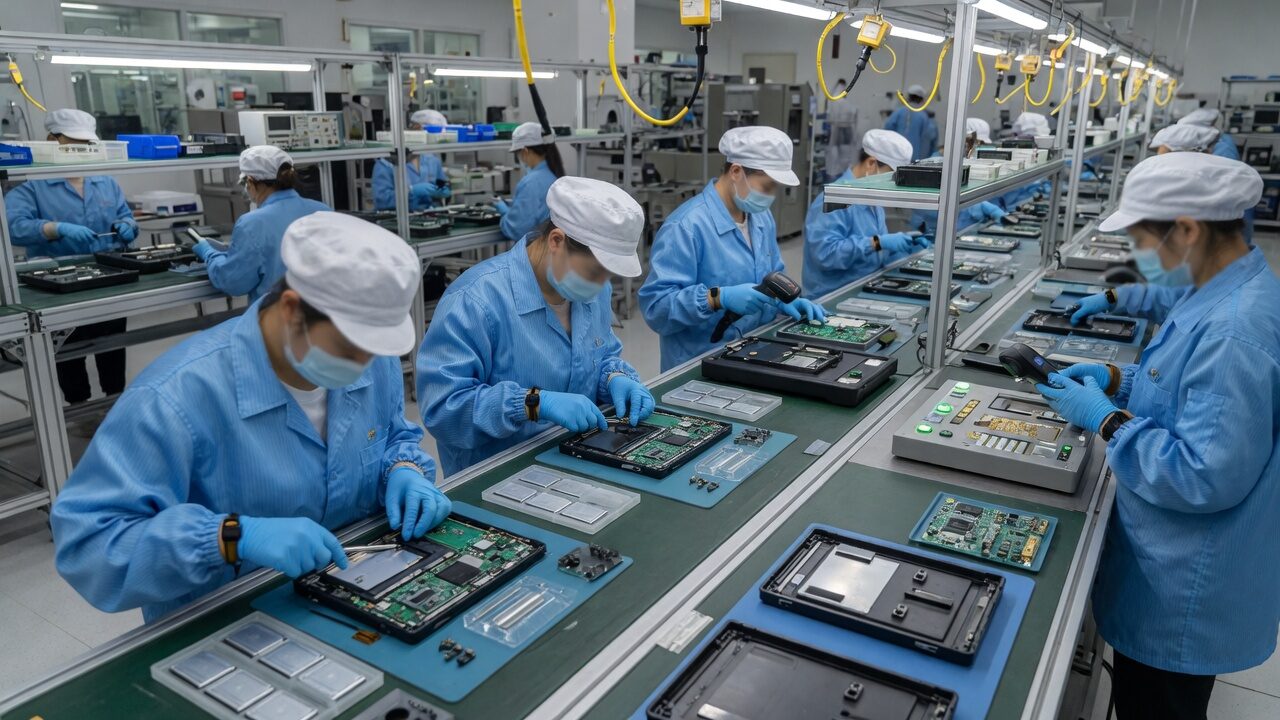
<p>New product introduction transfers design data into manufacturing process data. Tooling strategy, secondary operations, supplier selection, sample approval, in-process checks, final inspection, non-conformance handling, and pilot builds that stress instructions—not only hero units—are part of the work. A pilot that only builds best units carefully teaches little.</p>
<h2 id="process-transitions-during-scale-up">Process transitions during scale-up</h2>
<p>Print to learn geometry, then redesign for moulding draft and walls. Machine for material truth, then convert to cast or moulded geometry with secondary machining on critical features if needed. Electronics volume requires BOM risk management, test fixtures, and yield triage. GProto’s multi-process network exists so transitions are deliberate rather than forced by one shop’s equipment list.</p>
<h2 id="quality-and-ip-as-scale-increases">Quality and IP as scale increases</h2>
<p>Match quality depth to risk. Low-risk demos need less documentation than regulated products. Partner certifications should be named per project after verification. As partner count grows, enforce NDA practice, access control, confidentiality flow-down, and retention rules. Informal file sharing becomes a liability during scale-up.</p>
<h2 id="cost-timeline-realism-and-organization">Cost, timeline realism, and organization</h2>
<p>Budget revisions, tool modifications, failed tests, expedites, scrap, inspection, packaging, and labs—not only piece price. Offer timeline ranges only after requirements are seen. Organize with one project owner, specialist contributors, and written gates. GProto’s posture is that you contract with one accountable team while specialists execute.</p>
<h2 id="production-readiness-checklist">Production readiness checklist</h2>
<p>You are closer when requirements are testable and current, drawings are released with critical features, process selection is justified and DFM closed, pilot yield issues have owners, inspection matches risk, BOM is buyable, packaging is proven once, change control is enforced, roles are clear across companies, and commercial terms cover tools, IP, and acceptance. If many items are red, you are still validating even if marketing wants the word production.</p>
<h2 id="key-takeaways">Key takeaways</h2>
<p>Prototypes learn; production systems repeat. Validation gates reduce expensive ambiguity. Process transitions need deliberate DFM. Quality and IP controls must scale with partner count. One accountable owner across specialists is a manufacturing advantage.</p>
<h2 id="operational-guidance-note-1">Operational guidance note 1</h2>
<p>High-performing hardware teams treat manufacturing choices as living decisions tied to evidence. They document assumptions, mark critical dimensions, and refuse to let schedule pressure erase inspection criteria. When partners are multi-process and multi-region, a single project owner prevents conflicting instructions. GProto’s managed model is built around that ownership: requirements in, trade-offs visible, builds inspected, changes versioned. Apply the same rigor to packaging, logistics, and acceptance criteria that you apply to CAD—because those details decide whether a good design becomes a shippable product.</p>
<h2 id="operational-guidance-note-2">Operational guidance note 2</h2>
<p>High-performing hardware teams treat manufacturing choices as living decisions tied to evidence. They document assumptions, mark critical dimensions, and refuse to let schedule pressure erase inspection criteria. When partners are multi-process and multi-region, a single project owner prevents conflicting instructions. GProto’s managed model is built around that ownership: requirements in, trade-offs visible, builds inspected, changes versioned. Apply the same rigor to packaging, logistics, and acceptance criteria that you apply to CAD—because those details decide whether a good design becomes a shippable product.</p>
<h2 id="operational-guidance-note-3">Operational guidance note 3</h2>
<p>High-performing hardware teams treat manufacturing choices as living decisions tied to evidence. They document assumptions, mark critical dimensions, and refuse to let schedule pressure erase inspection criteria. When partners are multi-process and multi-region, a single project owner prevents conflicting instructions. GProto’s managed model is built around that ownership: requirements in, trade-offs visible, builds inspected, changes versioned. Apply the same rigor to packaging, logistics, and acceptance criteria that you apply to CAD—because those details decide whether a good design becomes a shippable product.</p>
<h2 id="operational-guidance-note-4">Operational guidance note 4</h2>
<p>High-performing hardware teams treat manufacturing choices as living decisions tied to evidence. They document assumptions, mark critical dimensions, and refuse to let schedule pressure erase inspection criteria. When partners are multi-process and multi-region, a single project owner prevents conflicting instructions. GProto’s managed model is built around that ownership: requirements in, trade-offs visible, builds inspected, changes versioned. Apply the same rigor to packaging, logistics, and acceptance criteria that you apply to CAD—because those details decide whether a good design becomes a shippable product.</p>
<h2 id="operational-guidance-note-5">Operational guidance note 5</h2>
<p>High-performing hardware teams treat manufacturing choices as living decisions tied to evidence. They document assumptions, mark critical dimensions, and refuse to let schedule pressure erase inspection criteria. When partners are multi-process and multi-region, a single project owner prevents conflicting instructions. GProto’s managed model is built around that ownership: requirements in, trade-offs visible, builds inspected, changes versioned. Apply the same rigor to packaging, logistics, and acceptance criteria that you apply to CAD—because those details decide whether a good design becomes a shippable product.</p>
<h2 id="operational-guidance-note-6">Operational guidance note 6</h2>
<p>High-performing hardware teams treat manufacturing choices as living decisions tied to evidence. They document assumptions, mark critical dimensions, and refuse to let schedule pressure erase inspection criteria. When partners are multi-process and multi-region, a single project owner prevents conflicting instructions. GProto’s managed model is built around that ownership: requirements in, trade-offs visible, builds inspected, changes versioned. Apply the same rigor to packaging, logistics, and acceptance criteria that you apply to CAD—because those details decide whether a good design becomes a shippable product.</p>
<h2 id="operational-guidance-note-7">Operational guidance note 7</h2>
<p>High-performing hardware teams treat manufacturing choices as living decisions tied to evidence. They document assumptions, mark critical dimensions, and refuse to let schedule pressure erase inspection criteria. When partners are multi-process and multi-region, a single project owner prevents conflicting instructions. GProto’s managed model is built around that ownership: requirements in, trade-offs visible, builds inspected, changes versioned. Apply the same rigor to packaging, logistics, and acceptance criteria that you apply to CAD—because those details decide whether a good design becomes a shippable product.</p>
<h2 id="operational-guidance-note-8">Operational guidance note 8</h2>
<p>High-performing hardware teams treat manufacturing choices as living decisions tied to evidence. They document assumptions, mark critical dimensions, and refuse to let schedule pressure erase inspection criteria. When partners are multi-process and multi-region, a single project owner prevents conflicting instructions. GProto’s managed model is built around that ownership: requirements in, trade-offs visible, builds inspected, changes versioned. Apply the same rigor to packaging, logistics, and acceptance criteria that you apply to CAD—because those details decide whether a good design becomes a shippable product.</p>
<h2 id="operational-guidance-note-9">Operational guidance note 9</h2>
<p>High-performing hardware teams treat manufacturing choices as living decisions tied to evidence. They document assumptions, mark critical dimensions, and refuse to let schedule pressure erase inspection criteria. When partners are multi-process and multi-region, a single project owner prevents conflicting instructions. GProto’s managed model is built around that ownership: requirements in, trade-offs visible, builds inspected, changes versioned. Apply the same rigor to packaging, logistics, and acceptance criteria that you apply to CAD—because those details decide whether a good design becomes a shippable product.</p>
<h2 id="operational-guidance-note-10">Operational guidance note 10</h2>
<p>High-performing hardware teams treat manufacturing choices as living decisions tied to evidence. They document assumptions, mark critical dimensions, and refuse to let schedule pressure erase inspection criteria. When partners are multi-process and multi-region, a single project owner prevents conflicting instructions. GProto’s managed model is built around that ownership: requirements in, trade-offs visible, builds inspected, changes versioned. Apply the same rigor to packaging, logistics, and acceptance criteria that you apply to CAD—because those details decide whether a good design becomes a shippable product.</p>
<h2 id="operational-guidance-note-11">Operational guidance note 11</h2>
<p>High-performing hardware teams treat manufacturing choices as living decisions tied to evidence. They document assumptions, mark critical dimensions, and refuse to let schedule pressure erase inspection criteria. When partners are multi-process and multi-region, a single project owner prevents conflicting instructions. GProto’s managed model is built around that ownership: requirements in, trade-offs visible, builds inspected, changes versioned. Apply the same rigor to packaging, logistics, and acceptance criteria that you apply to CAD—because those details decide whether a good design becomes a shippable product.</p>
<h2 id="operational-guidance-note-12">Operational guidance note 12</h2>
<p>High-performing hardware teams treat manufacturing choices as living decisions tied to evidence. They document assumptions, mark critical dimensions, and refuse to let schedule pressure erase inspection criteria. When partners are multi-process and multi-region, a single project owner prevents conflicting instructions. GProto’s managed model is built around that ownership: requirements in, trade-offs visible, builds inspected, changes versioned. Apply the same rigor to packaging, logistics, and acceptance criteria that you apply to CAD—because those details decide whether a good design becomes a shippable product.</p>
<h2 id="operational-guidance-note-13">Operational guidance note 13</h2>
<p>High-performing hardware teams treat manufacturing choices as living decisions tied to evidence. They document assumptions, mark critical dimensions, and refuse to let schedule pressure erase inspection criteria. When partners are multi-process and multi-region, a single project owner prevents conflicting instructions. GProto’s managed model is built around that ownership: requirements in, trade-offs visible, builds inspected, changes versioned. Apply the same rigor to packaging, logistics, and acceptance criteria that you apply to CAD—because those details decide whether a good design becomes a shippable product.</p>
<h2 id="post-launch-manufacturing-excellence">Post-launch manufacturing excellence</h2>
<p>Shipping version one is not the end of NPI. After launch, monitor field returns, yield trends, and supplier process drift. Hold quarterly process reviews on Class A parts. Maintain a service-parts strategy that may differ from volume processes—CNC or small-lot moulding often returns for spares.</p>
<h3 id="capacity-planning-and-dual-sourcing">Capacity planning and dual sourcing</h3>
<p>Identify single points of failure in tools, materials, and specialized finishes. Dual-source where risk justifies cost. Document switchover criteria. Capacity claims should be tested with pilot rates, not brochure numbers.</p>
<h3 id="human-factors-on-the-line">Human factors on the line</h3>
<p>Work instructions should be visual, current, and tested by people who did not design the product. If only the original engineer can build the unit correctly, you do not have a production process—you have a performance art.</p>
<h3 id="connecting-firmware-release-trains-to-hardware-freezes">Connecting firmware release trains to hardware freezes</h3>
<p>For connected devices, align firmware release candidates with hardware revisions. Changing board spin, enclosure tooling, and major firmware features in the same week multiplies root-cause complexity. Stagger freezes and keep a compatibility matrix.</p>
<h3 id="executive-go-no-go-discipline">Executive go/no-go discipline</h3>
<p>Leaders should ask for residual risk, not only green dashboards. A credible go decision lists known issues, mitigations, owners, and dates. Soft launches with hidden red risks create expensive surprises. GProto encourages written gates so manufacturing partners receive clear authority to proceed or pause.</p>
<h2 id="additional-engineering-reference-for-practitioners">Additional engineering reference for practitioners</h2>
<p>Clear manufacturing strategy depends on evidence, not slogans. Teams should capture decision logs whenever process, material, or tolerance choices change. Those logs become training material for the next program and reduce repeated mistakes. In multi-partner environments, decision logs also protect continuity when personnel rotate.</p>
<h3 id="drawing-package-completeness-checklist">Drawing package completeness checklist</h3>
<p>Confirm title blocks, revisions, materials, finishes, critical dimensions, general tolerance references, thread specifications, surface texture notes, weld symbols where relevant, assembly balloons, and next-operation notes. Incomplete packages create RFQ churn and hidden assumptions. GProto project kicks work better when the package is complete on first share.</p>
<h3 id="supplier-communication-standards">Supplier communication standards</h3>
<p>Use written questions with due dates. Avoid ambiguous phone-only agreements for dimensional acceptance. Summarize calls in the project record. Share one prioritized issue list rather than parallel conflicting emails from multiple stakeholders.</p>
<h3 id="risk-scoring-for-process-selection">Risk scoring for process selection</h3>
<p>Score technical risk, schedule risk, cost risk, and supply risk separately. A process can be cheap and still wrong if schedule risk is existential for a launch. Conversely, a more expensive CNC bridge can be correct when it protects a certification window.</p>
<h3 id="knowledge-reuse">Knowledge reuse</h3>
<p>After each pilot, write a one-page retrospective: what geometry caused cost, what inspection caught, what change orders appeared, what packaging failed. Store retrospectives where future teams can find them. Organizations that learn in writing compound advantage.</p>
<h3 id="closing">Closing</h3>
<p>Whether you are comparing CNC, additive, and moulding, running a DFM checklist, or transferring a prototype into production, the pattern is identical: define proof, write constraints, choose deliberately, inspect honestly, and keep one owner accountable for the whole thread.</p>
<h2 id="additional-engineering-reference-for-practitioners">Additional engineering reference for practitioners</h2>
<p>Clear manufacturing strategy depends on evidence, not slogans. Teams should capture decision logs whenever process, material, or tolerance choices change. Those logs become training material for the next program and reduce repeated mistakes. In multi-partner environments, decision logs also protect continuity when personnel rotate.</p>
<h3 id="drawing-package-completeness-checklist">Drawing package completeness checklist</h3>
<p>Confirm title blocks, revisions, materials, finishes, critical dimensions, general tolerance references, thread specifications, surface texture notes, weld symbols where relevant, assembly balloons, and next-operation notes. Incomplete packages create RFQ churn and hidden assumptions. GProto project kicks work better when the package is complete on first share.</p>
<h3 id="supplier-communication-standards">Supplier communication standards</h3>
<p>Use written questions with due dates. Avoid ambiguous phone-only agreements for dimensional acceptance. Summarize calls in the project record. Share one prioritized issue list rather than parallel conflicting emails from multiple stakeholders.</p>
<h3 id="risk-scoring-for-process-selection">Risk scoring for process selection</h3>
<p>Score technical risk, schedule risk, cost risk, and supply risk separately. A process can be cheap and still wrong if schedule risk is existential for a launch. Conversely, a more expensive CNC bridge can be correct when it protects a certification window.</p>
<h3 id="knowledge-reuse">Knowledge reuse</h3>
<p>After each pilot, write a one-page retrospective: what geometry caused cost, what inspection caught, what change orders appeared, what packaging failed. Store retrospectives where future teams can find them. Organizations that learn in writing compound advantage.</p>
<h3 id="closing">Closing</h3>
<p>Whether you are comparing CNC, additive, and moulding, running a DFM checklist, or transferring a prototype into production, the pattern is identical: define proof, write constraints, choose deliberately, inspect honestly, and keep one owner accountable for the whole thread.</p>
Frequently asked questions
What is NPI?
New product introduction is the structured transfer of a validated design into a manufacturing system that can produce it repeatedly with agreed quality, cost, and capacity.
What is the difference between EVT, DVT, and PVT?
EVT focuses on design intent in integrated builds, DVT on meeting requirements under realistic conditions, and PVT on proving the process can repeat at rate with controlled quality.
When is a product ready for production tooling?
When tooling-critical freezes are justified by validation evidence, DFM is closed, and sample approval criteria are agreed—not merely when a demo succeeds.
What is the biggest prototype-to-production mistake?
Treating a successful one-off build as proof of process readiness, yield, cosmetics, and supply chain capability.
Can GProto help with manufacturing-only transfers?
Yes. Many programs enter mid-stream with existing CAD. The requirement is honesty about what is validated versus merely modelled.
Talk to GProto about your next build
Share CAD, constraints, and what the next build must prove. We map process options, DFM risks, and a path from
prototype to production.